From September 2026, firewood sold in Ireland needs to come in at under 20% moisture content. If you're buying or burning firewood, that's worth knowing, because it affects what you can buy, how you store it, and how well your fire actually performs.
Here's the plain English version of what's changing and what to do about it.
So What's Actually Changing?
The current legal limit for firewood moisture content in Ireland is under 25%. From 1 September 2026, that drops to under 20% for firewood sold in units of two cubic metres or less.
It's been flagged for a few years now under Ireland's solid fuel regulations, and the date has been pushed back once already. This time it's happening. If you buy firewood regularly, it's worth knowing what 20% actually means in practice.
Why Does Moisture Content Matter?
Honestly, this is less about regulations and more about getting a decent fire going.
Wet wood is a pain. It doesn't light well, it smokes, it blacks up your stove glass, and it builds up tar and creosote in your flue faster than dry wood ever would. You end up burning through more of it for less heat.
Dry wood, under 20% moisture, is a different story altogether. It catches quickly, burns hot and clean, and is much easier on your stove and chimney. The regulations exist for air quality reasons, but the practical case for dry wood is just common sense.
How Do You Know If Your Wood Is Dry Enough?
The quickest way is a moisture metre.They cost from around €25 and give you a reading in seconds. Push the pins into the split face of a log (not the bark side) and check a few pieces from the batch, not just one.
If you don't have a metre, the old tests still work as a rough guide:
- Dry logs are noticeably lighter than wet ones
- Knock two together and listen for a sharp crack rather than a dull thud
- Look for cracks or splits at the end grain
If your wood is hissing and smoking on the fire, it's too wet. Simple as that.
Storage Is Everything
This is where most people go wrong. Good wood stored badly ends up wet wood, and in the Irish climate, that happens faster than you'd think.
A few things that make a real difference:
Get it off the ground. Moisture wicks straight up from soil into the base of your stack. Use a proper log store, pallets, or timber bearers to keep a barrier between the logs and the ground.
Keep the rain off. A covered store makes an enormous difference. You want air moving through the sides of the stack, not rain coming in the top.
Give it room to breathe. Don't pack logs in too tight. Airflow through the stack is what dries the wood out and keeps it dry.
Bring some inside ahead of time. If your main store is outside, bring in a few days' worth before you need them. Logs that come in from the cold and damp will burn a lot better once they've had a day or two inside.
What This Means If You're Buying Firewood
From September, any firewood sold in smaller loads should legally be under 20%. It's worth asking your supplier what their moisture content is. Any decent supplier will be able to tell you.
Kiln dried firewood is the most reliable option if you want to be sure. It's dried to a consistent level and ready to burn straight away. Traditionally seasoned hardwood, ash and oak especially, can get there too, but it needs proper time and decent storage to stay there.
Either way, if you're storing wood at home, the way you keep it matters just as much as how dry it was when it arrived.
That's Where Timber Croc Comes In
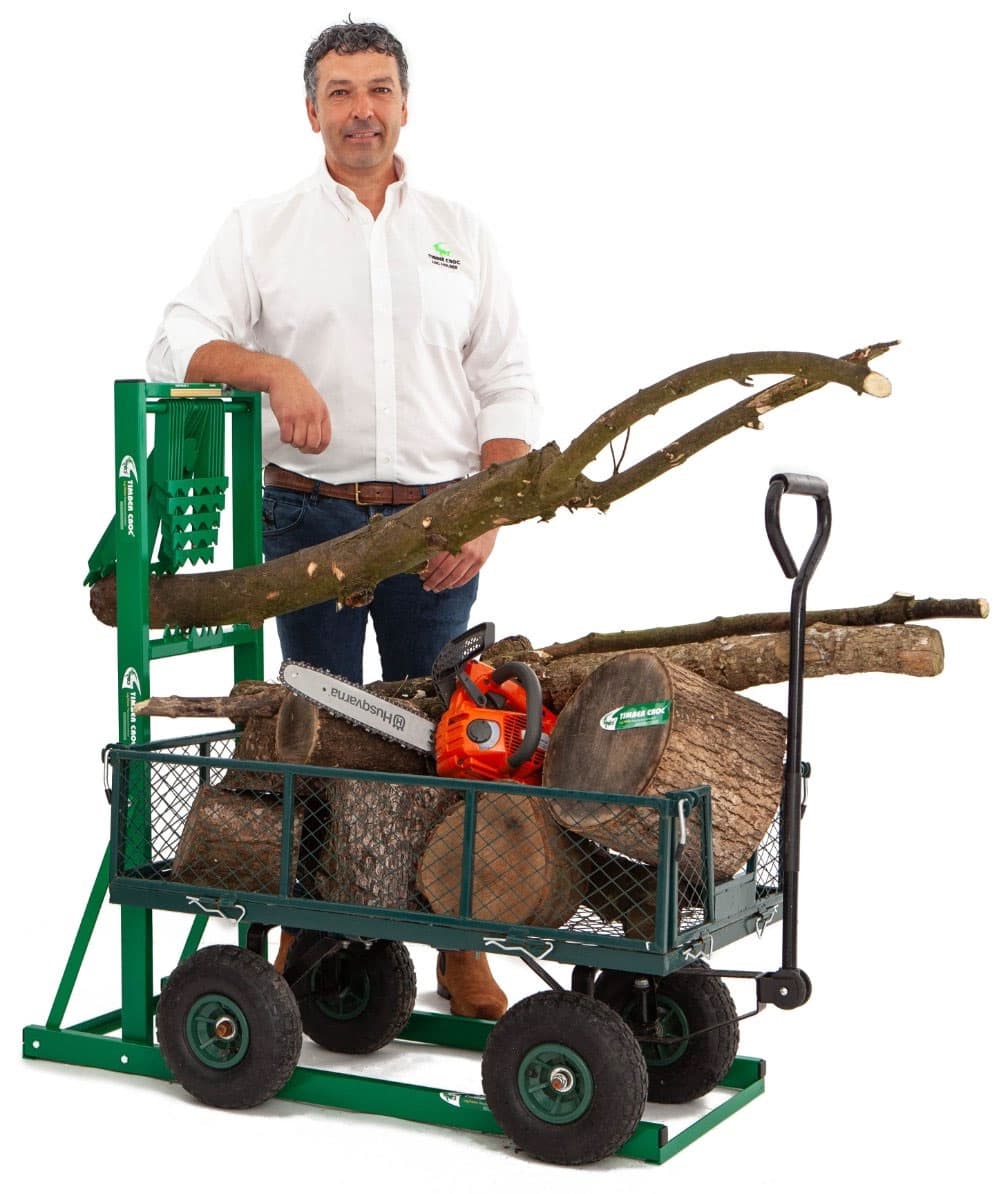
At Timber Croc, we make patented self-adjusting log holders for cutting wood safely. If you're cutting your own firewood, our log holder holds the timber securely at hip height while you work, no chains, clamps, or second pair of hands needed. The self-adjusting teeth grip whatever you put in, from small rounds to logs over 200kg.
Cutting your own wood is the best way to know exactly what you've got and how it's been stored. If you're doing it regularly, having the right setup makes it faster, safer, and a lot less hassle.
Want to explore our full range? Click here.